

Sign up to our Newsletter to receive news and updates about ETCMA
6000 BCE
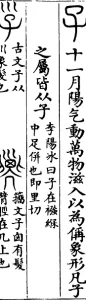 Sharp bone and stone instruments discovered in China dating from this period known as bian stones, are described as ‘pieces of stone used for treating illness by pricking the body’ by philosopher Han Fei and the Shuowen Jiezi (Explaining Graphs and Analyzing Characters ) – one of the earliest Chinese dictionaries, written in 100 AD.
476-221 BCE
During the tumultuous western warring states, Several major developments helped shape not just Acupuncture but the entirety of Traditionally Chinese Medicine. Confucianism and Daoism as paradigms that would later become part of TCM theoretic, as well as the refinement of the Wu Xing (Five elements) and Yin Yang philosophies helped set the ground works for later developments in the fields of Acupuncture and TCM. 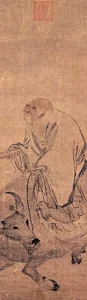
198 BCE
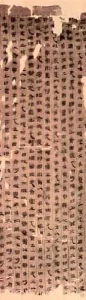 Burial tombs, estimated to have been sealed during Mawangdu period contained, amongst other artefacts unearthed in 1973, silk scrolls, which depict a medical practice related to acupuncture meridian systems their circulation and also included symptoms and pathologies. One specific text called the Wushier Bingfang (The Fifty-two Prescriptions), even detailed 52 ailments and 52 prescriptions, and is perhaps the earliest written reference of Chinese pharmacology.
100 BCE
Huangdi Neijing (The Yellow Emperor’s Classic of Internal Medicine, consisting of two sections, Suwen (The Book of Plain Questions) thought to have actually been written during Warring States periods and the Lingshu (The Vital Axis) an entire section dedicated to Acupuncture. These texts containing thousands of years of traditions. Describe an organized comprehensive system of diagnosis & treatment recognized today as Acupuncture. The concepts of meridians, Qi flow and acupuncture meridians were well established at this time. The text also recorded use of other modalities including manual techniques (tuina), herbal medicine, and Qigong (energy work)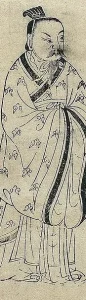
295 AD
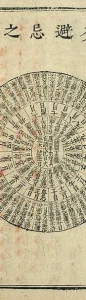
Acclaimed Chinese physician and acupuncturist, historian, writer, Huangfu Mi pens the Zhen Jiu Jia Yi Jing (Cannon of Acupuncture and Moxibustion) consisting of 12 volumes divided into 128 chapters. Considered to be the earliest systemic works devoted entirely to the practice of acupuncture and moxibustion, it formed the basis for many of the acupuncture techniques that are practiced today.
A Contemporary of the time was another renowned physician, Zhang Zhongjing who wrote the quintessential manuscript for diagnosis and treatment of Cold which is available at Oxford Academic Library for online access
552 AD
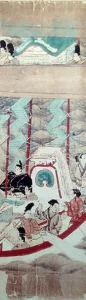
Acupuncture begins its migration to Japan and Korea. The Emperor of the Chinese Liang Dynasty Wen Di presents a copy of Zhen Jing, a lost text on acupuncture predating Zhen Jiu Jia Yi Jing, to the Imperial court of Japan.
The Imperial Government of Japan will subsequently rule in 701 AD that all acupuncture courses offered by medical institutions must be based upon the Zhen Jiu Jia Yi Jing. Around the same time, Acupuncture is thought to have begin to be practiced in Korea.
618 AD
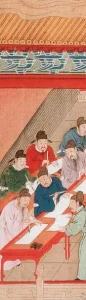 The Silk Road – Early Tang Dynasty expanded China making it the most powerful Asian country. It also founded a dedicated Imperial Medical Academy, which included the official study of Chinese medicine. Subsequently in 618 AD it became the first formal institution to officially recognize acupuncture as an independent specialty. All students enrolled in the medical school were required to study classics such as the Huang Di Nei Jing (The Yellow Emperor’s Classic of Internal Medicine), Shennong Bencaojing (Classic of Herbal Medicine), Maijing (Pulse Classic or Manual on the Pulses), and Zhenjiu Jiayijing (The ABC of Acupuncture and Moxibustion).
1023 AD
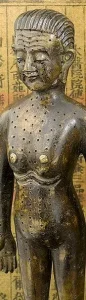
A dedicated effort by a court physician Wang Weiyi to revise and compile an accurate work on acupuncture meridians and to verify acupoints and channels. He publishes Tong Ren Shu Xue Zhen Jiu Tu Jing (Illustrated Classic of Acupuncture and Moxibustion Points as Demonstrated on the Bronze Figure) three years later.
Some time later, students studying at various medical academies were also instructed in the subject of anatomy with the help of illustrations by the physician, poet Yang Jie compiled from autopsies of executed prisoners.
Some time later, students studying at various medical academies were also instructed in the subject of anatomy with the help of illustrations by the physician, poet Yang Jie compiled from autopsies of executed prisoners.
1331 AD
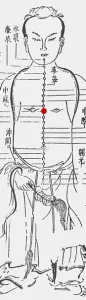
Four Books of Acupuncture and Moxibustion (Zhenjiu Sishu) published by Dou Guifang compiled important works written during the Song and Jin Dynasties on acupuncture and provided detailed information on various point prescriptions (i.e. jiuwei mentioned in Huangdi Mingdang Jiujing (one of the four books) could be used for treating palpitations and epilepsy.
During this time. Mongols also contributed to the medical knowledge of Acupuncture and Moxibustion. Therapeutic methods like Mongolian moxibustion (Hormé) and blood-letting were some of the more well known.
1368 -1600 AD Publishing Boom
During the Ming Dynasty Acupuncture reaches new professional and public esteem, in part due to its inclusion as one of the 13 Medical Departments of the Imperial Medical Academy. It quickly becomes one of the primary care systems used in China, alongside herbs, massage, diet, and moxibustion. During this period, Yang, Jizhou, Zhao Wenbing Publish their seminal work Zhen jiu da cheng. The Great Compendium of Acupuncture and Moxibustion. Still in press today.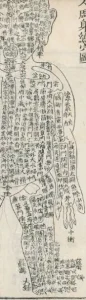
1500-1700 AD Move to Europe
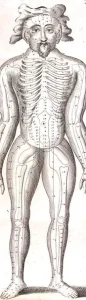
Migration into Europe. During the Middle Ages, the Dutch East India Company, introduced Chinese acupuncture procedures in Europe (one interesting result of this was the development of the western hypodermic needle from Chinese acupuncture needles). And as French Jesuit missionaries returned from the East, made the acupuncture technique known to the Europeans for the treatment of pain and a variety of other disorders. Dr. Willem ten Rhyne was one of the first physicians to write medical reports on acupuncture, which were published as a Dissertation. He also coined the modern term of Acupuncture from Latin acus and punctura.
1800 -1950 AD Europe
A tumultuous period for Acupuncture, as many western physicians considered it a “petty skill” and favored western medicine to the “placebo” effect. Yet many physicians conducted work and published on Acupuncture.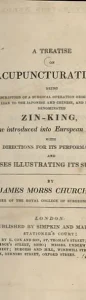
1822 AD First mention in the United States
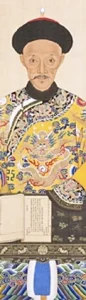 In the mean time, Acupuncture suffers a decline in mainland China. The Emperor of the Qing Dynasty Daoguang issues an imperial decree declaring acupuncture unfit as a treatment for a ruler, and banns it forever from the Imperial Medical Institute. in 1929 during the civil war between the Republic of China and the Chinese Communist Party, The National Medical Assembly of China blocks an attempted ban by the Chinese government on all forms of traditional Chinese medicine. Interestingly, at the same time, Acupuncture is mentioned in medical literature in the United States for the first time.
1949 AD China
Following the installation of the Communist government in China, all traditional forms of medicine are re-established and encouraged. It ensures the availability of basic level of health care and medication to the community. This re-establishment generates new encouragement in advances and research into acupuncture techniques such as acupuncture point injections, cat-gut, fire needling, seven star.
1971 AD It took Nixon
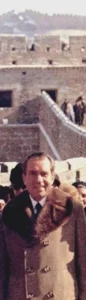
In preparation for the unprecedented visit to PRC by the US President Nixon, one of the US press corps members, James Reston, vice president of The New York Times was treated with Acupuncture following an emergency appendectomy. He described his experience in the New York Times and as a result, teams of US physicians made tours to China to assess Acupunctures therapeutic applications. Subsequently Major General Walter R. Tkach, of the U.S. Air Force and physician to President Nixon, wrote an article in the July 1972 issue of Readers Digest, entitled, “I Watched Acupuncture Work” In 1971, Dr. Samuel Rosen, a New York surgeon, witnessed acupuncture used for anesthesia during his visit to China and reported later that he was unable to explain medically the successful application he had witnessed.
TODAY
 1997 – United States. The acknowledgment of the value of acupuncture for its pain relief in 1997, prompted the National Institute of Health in United States to declared that there was sufficient evidence of acupuncture’s value to expand its use into conventional medicine. 2013 – United Kingdom. Arthritis Research UK finds acupuncture to be the most effective complementary therapy for osteoarthritis, lower back pain, and fibromyalgia. For those interested in learning more, read The last 20 years of Chinese Medicine Acupuncture is now increasingly accepted as a therapeutic technique by western physicians, especially for pain relief.
Tomorrow
 In the hands of a well-trained, specialized, practitioners, acupuncture has wider applications beyond pain relief. The World Health Organization (WHO) recognizes the use of acupuncture in the treatment of a wide range of common illnesses.